
Members Login

Channels
Special Offers & Promotions
HORIBA Scientific presents the 'nano partica' SZ-100, Particle Size, Zeta Potential and Molecular Weight Analyzer
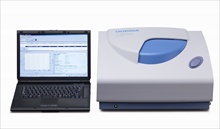 The new SZ-100 series instruments analyze key particle physical properties including size, zeta potential, molecular weight, and second virial coefficient (A2). Particle size analysis is performed by dynamic light scattering (DLS). Zeta potential is measured by electrophoretic light scattering. Molecular weight and A2 are analyzed by static light scattering using a Debye plot.
The SZ-100 is the only instrument available capable of performing size measurements at both 90° and backscatter (173°). This unique feature provides maximum sensitivity and allows the user to optimize measurement conditions for all possible sample types. Particle size measurements are performed in a variety of cells at volumes down to 12 µL. Zeta potential measurements are made in either disposable cells for aqueous samples or dip cells for organic and biological samples. The unique disposable cells using carbon electrodes can typically measure hundreds of samples before requiring replacement.
An automatic titrator is available for iso-electric point determinations of zeta potential vs. pH, or studies investigating optimum surfactant concentration for formulation or processing.
Particle size measurements can be made from 0.3 nm - 8 µm at concentrations from 0.1 mg/mL (lysozyme) to 40 wt percent depending on sample properties. Zeta potentials from -200 to +200 mV can be analyzed manually or with the auto titrator. Molecular weight of small particles (<100 nm) is measured from 1x10³ to 2x10⁷ g/mol. Typical applications include nanoparticles, colloids, proteins, biomolecules, and emulsions.
For more information or for demonstration click here info-sci.fr@horiba.com or click here to visit our website.
Subscribe to any of our newsletters for the latest on new laboratory products, industry news, case studies and much more!

Popular this Month
Top 10 most popular articles this month
Today's Picks
Looking for a Supplier?
Search by company or by product
Please note Lab Bulletin does not sell, supply any of the products featured on this website. If you have an enquiry, please use the contact form below the article or company profile and we will send your request to the supplier so that they can contact you directly.
Lab Bulletin is published by newleaf marketing communications ltd.
Media Partners