
Members Login
Channels
Special Offers & Promotions
New Paper from Optibrium and Tessella Illustrates Scientists
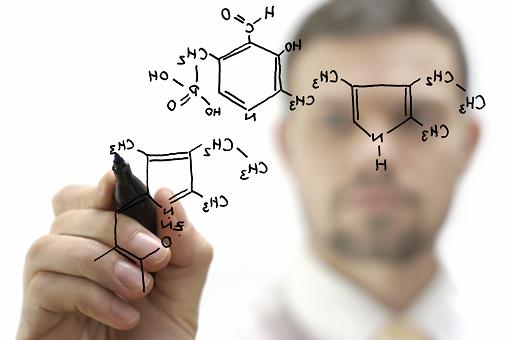 Optibrium, a provider of software solutions for drug discovery, and Tessella, the information technology and consulting services company and world leaders in digital preservation technology, today published a new paper highlighting that scientists' instincts may not always lead them to making good drug discovery decisions. The challenges of decision-making arise from the importance of multiple/conflicting criteria to the success of a potential drug molecule, the large amount of data generated and the inherent uncertainty in that data. The study illustrates how biased decisions in drug discovery can result in scientists missing good compounds by not searching widely enough and wasting resources by clinging to ideas that should be dismissed. The new paper: "Overcoming Psychological Barriers to Good Discovery Decisions" is published in Drug Discovery Today (2010) Volume 15, Numbers 13/14_July 2010. A version may be downloaded free of charge from www.optibrium.com/community/.
 The paper identifies that while company rules, processes and systems seek to foster objectivity, common biases in decision making may hinder achievement of best possible performance. Psychological research proves again and again that people are bad at making complex decisions where there is risk involved. The paper demonstrates how better individual and team decision-making within drug discovery would enhance R&D performance. Feedback on problem solving performance could be one of the simplest measures to improve selection of compounds and effective screening sequences. The study also highlights that computational tools provide a more scientific approach that encourages objective consideration of all of the available information, helping scientists make decisions that are both balanced and rational, in the domains of library design, compound selection, screening, profiling and experimental design.
Drug discovery leaders receive much conflicting advice on possible ways to improve productivity and restore the rate of successful drug launches. Continuing technology investment, outsourcing of shared services and formation of smaller, disease-specific units, which bring researchers closer to clinicians are all current trends. However, senior management cannot afford to ignore the human dimension - are their teams making the best possible decisions given the information available to them, or that could be available given the right experiments?
Dr. Andrew Chadwick, Principal Consultant, Tessella, explains, "Past experience shows that many practical researchers remain baffled or confused by probabilistic models and so shy away from formal decision analysis. Yet reliance on gut instinct tends to lead to consistent patterns of mistakes. Discovery groups need to define and encourage ‘best practice' to conduct projects in a way that captures wider company and industry experience. There is a need to make this as simple and accessible as possible via a more scientific approach."
Good decision-making is central to drug discovery success and the new paper demonstrates that the interactive software platform, StarDrop from Optibrium, can help drug discovery scientists to guide their scientific judgment to make decisions with greater success. Dr. Matthew Segall, CEO of Optibrium, explains, "StarDrop can help drug discovery scientists to guide their decisions while designing and prioritising molecules with the aim of achieving an optimal balance of properties. The probabilistic scoring approach, employed by the StarDrop software platform to guide compound selection decisions in drug discovery, indicates the likelihood of success of a compound against a set of property criteria, given the available property data for that compound and taking into account the underlying uncertainty in the data."
The intuitive software provides a decision-making framework, offering advantages over traditional predictive modelling platforms as it specifically helps users to identify chemistries with a high chance of success and focus expensive in-house resources. Used by pharmaceutical and biotech companies and research establishments globally, StarDrop guides compound selection and design decisions in all stages of drug discovery. The software provides a comprehensive range of features to support design and prioritization of high quality compounds including: probabilistic scoring; chemical space and glowing molecule visualisation; ADME QSAR models; P450 metabolism models and automatic model building.
To learn more about how StarDrop can aid good decision-making in drug discovery please call Optibrium on +44 (0) 1223 815 900 or visit www.optibrium.com.
Subscribe to any of our newsletters for the latest on new laboratory products, industry news, case studies and much more!
Popular this Month
Top 10 most popular articles this month
Today's Picks
Looking for a Supplier?
Search by company or by product
Please note Lab Bulletin does not sell, supply any of the products featured on this website. If you have an enquiry, please use the contact form below the article or company profile and we will send your request to the supplier so that they can contact you directly.
Lab Bulletin is published by newleaf marketing communications ltd.
Media Partners