
Members Login
Channels
Special Offers & Promotions
Olympus introduces new clinical microscopy software
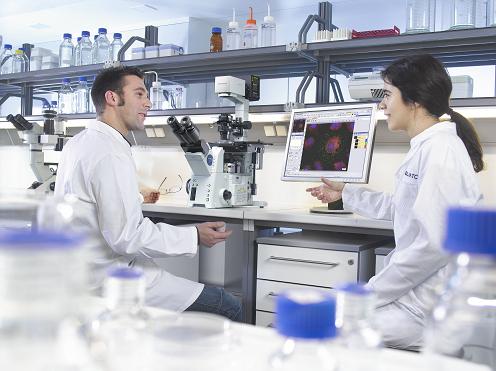 Olympus has now introduced labSens - a complete documentation package for clinical and research imaging. The software provides a workflow-oriented user interface, ensuring that the key functions for digital imaging, analysis and documentation are clearly presented and easy to use. This is achieved by seamlessly combining the new Olympus BX3 clinical microscopes with digital-imaging cameras, as well as automation components, to provide the perfect conduit between the user, the process and the microscope system.
The labSens software programme meets all of the essential image-acquisition, processing and discussion needs of the modern clinical laboratory. Full support for the new Olympus BX3 clinical microscope systems and digital-imaging cameras, coupled with an easy-to-use graphical interface that enables the definition of the most important functions, allows users to develop a complete imaging solution to streamline their workflow. This results in the ideal interactive environment for acquiring, displaying, commenting on, measuring and handling images. Importantly, labSens also provides full control over other automation and motorised components of the BX3 system, such as the coded manual or fully motorised nosepieces, condensers and stage. This provides further efficiency and ergonomic advantages for the user.
Imaging excellence
The labSens software provides the user with complete control over a broad range of Olympus cameras, so that framing and capturing images becomes very straightforward, requiring just one click on the icon. If the coded nosepiece is installed on the microscope, the objective in use is automatically detected by the software so that the scale bar is set and recorded correctly in the meta data of an image. Once captured, labSens provides users with a number of essential image-processing tools including rotation and cropping. It also enables users to perform multiple image alignment (MIA), as well as basic measurements (distances, areas). Importantly, labSens supports the addition of annotations, such as text and drawings.
The labSens software carefully manages images and associated meta-data, enabling the user to query existing data. This capability can be expanded further with the dedicated labSens Patho solution, which offers excellent data security and full traceability. labSens works with other standard software programmes, enabling the user to send images by email from within labSens, as well as to retrieve images easily from structured databases. labSens can also integrate with an Olympus VS110 Net Image Server SQL database for completely streamlined clinical imaging.
Olympus has developed labSens with flexibility in mind, so that it can be expanded through the implementation of additional hardware and software modules. For example, the software can be used on an interactive touch-screen computer monitor and supports clinical laboratories that use barcoded slides for better data and patient tracking.
labSens Patho
The labSens Patho solution is an advanced documentation package for clinical results. The software builds on the basic functionality of labSens with the addition of a workflow tool window for secure data entry, local databasing and connectivity to a number of external databases. The labSens Patho solution ensures that images and associated data such as slide IDs and clinical result information, as well as meta-data, are managed in a clear and controllable way. This is ideal for implementing consistent data structure and clear documentation routines. Stored images and image information can be accessed directly from other systems or can be made available from anywhere in the network, which can improve lab response times to requests and the overall speed of internal communication.
labSens NetCam
Using standard TCP/IP protocols, the labSens NetCam solution enables the transfer of live and stored images throughout the network, from one source to any number of destinations for teaching, mentoring or supervision. From outside the lab, colleagues or supervisors can monitor the work from any point on the network, reducing waiting time.
For further information please visit www.microscopy.olympus.eu
Subscribe to any of our newsletters for the latest on new laboratory products, industry news, case studies and much more!
Popular this Month
Top 10 most popular articles this month
Today's Picks
Looking for a Supplier?
Search by company or by product
Please note Lab Bulletin does not sell, supply any of the products featured on this website. If you have an enquiry, please use the contact form below the article or company profile and we will send your request to the supplier so that they can contact you directly.
Lab Bulletin is published by newleaf marketing communications ltd.
Media Partners