
Members Login


Channels
Special Offers & Promotions
Optibrium Announces Free Models to Predict Toxicity of Compounds
 Optibrium, a provider of software solutions for drug
discovery, announces the availability of a range of models to help predict the
toxicity of potential new compounds. Optibrium has generated a range of
Quantitative Structure Activity Relationship (QSAR) models of key toxicity
endpoints, based on data made available by the US Environmental Protection
Agency (EPA) as part of its Toxicity Evaluation Software Toolkit (T.E.S.T.).
The toxicity prediction models were built with the Auto-Modeller module of the newly
launched StarDrop 5 and are available to all StarDrop users free-of-charge.
Optibrium, a provider of software solutions for drug
discovery, announces the availability of a range of models to help predict the
toxicity of potential new compounds. Optibrium has generated a range of
Quantitative Structure Activity Relationship (QSAR) models of key toxicity
endpoints, based on data made available by the US Environmental Protection
Agency (EPA) as part of its Toxicity Evaluation Software Toolkit (T.E.S.T.).
The toxicity prediction models were built with the Auto-Modeller module of the newly
launched StarDrop 5 and are available to all StarDrop users free-of-charge. To find out more and download the models please visit Optibrium's on-line community at http://www.optibrium.com/community.
Whether compounds are intended as drugs, cosmetics, agrochemicals or for other industrial applications, it is essential to understand their potential to cause toxic effects. Understanding this can allow scientists to prioritise chemical structures for further research or identify the most appropriate downstream experiments to confirm their safety. However, the ability to predict toxicities in compounds can be extremely challenging.
Models have a high degree of uncertainty in the predictions they make due to the complexity and variety of chemical and biological mechanisms that lead to toxicities.
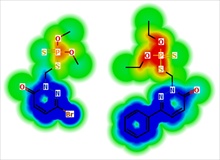
StarDrop, from Optibrium, is an interactive platform that guides scientists to make decisions on the design and selection of high quality compounds with the aim of achieving an optimal balance of properties. StarDrop provides an ideal environment for application of toxicity models to the selection of compounds. Its probabilistic scoring algorithm allows predictive models of toxicity to be used, while explicitly taking into consideration the uncertainty in each prediction. This ensures that uncertain predictions are not given undue weight, relative to other data, when prioritising compounds that are more likely to have an appropriate balance of properties. As a result, compounds which are more likely to be toxic are efficiently identified, improving lead optimisation. The unique Glowing Molecule feature within StarDrop offers an innovative visualisation that highlights regions of a compound with a significant influence on a predicted property. As a result, this provides a link between the predicted toxicity and the chemical mechanism and guides users in the redesign of compounds with improved safety.
"These predictive toxicity models complement the range of properties that can already be predicted with StarDrop's ADME QSAR module. As they're based on public-domain data sets, we're pleased to offer them free-of-charge to all of our users." comments Dr. Matthew Segall, CEO of Optibrium. "Many of the toxicity prediction models developed with the use of StarDrop are particularly relevant to potential environmental pollutants. This illustrates the usability of StarDrop not just for drug discovery applications, but for industrial, agrochemical or cosmetic applications."
The toxicity prediction models conform to the Organisation for Economic Cooperation and Development (OECD) principles for validation of QSAR models for regulatory purposes and have also been found to perform equivalently or better than the EPA T.E.S.T. models on the same validation sets. All models were built automatically with StarDrop's Auto-modeller module, illustrating that the Auto-Modeller is capable of building models that compare favourably with those created with more ‘manual' methods. For further information please visit Optibrium's on-line community at http://www.optibrium.com/community.
About Optibrium Ltd
Optibrium (www.optibrium.com) is dedicated to providing software to guide decisions involving complex, uncertain data in an intuitive way. Based in Cambridge, UK, Optibrium has a global customer base ranging from top-ten pharmaceutical companies to small biotechs and academic groups. Our mission is to continue to develop new technologies that will optimise project strategy, reduce wasted molecules and experiments, shorten timelines and improve the quality of candidate compounds for our clients. Optibrium's primary product, StarDrop, is focused on the drug discovery industry, helping guide scientists to make decisions in the design and selection of high quality drug candidates. Visit the online community at http://www.optibrium.com/community/ for further discussions on improving the productivity of drug discovery.
Subscribe to any of our newsletters for the latest on new laboratory products, industry news, case studies and much more!
Popular this Month
Top 10 most popular articles this month
Today's Picks
Looking for a Supplier?
Search by company or by product
Please note Lab Bulletin does not sell, supply any of the products featured on this website. If you have an enquiry, please use the contact form below the article or company profile and we will send your request to the supplier so that they can contact you directly.
Lab Bulletin is published by newleaf marketing communications ltd.
Media Partners