A new manual cryostat offers scientists improved functionality and ergonomics, ensuring efficient, high-quality frozen sectioning.
The Thermo Scientific HM525 NX is a routine clinical cryostat that has 27 cooled specimen positions, including 4 fast freeze positions, allowing a high degree of flexibility when managing specimens.
“Pathologists rely on quick turnaround time and excellent sectioning quality from their cryostat,” said Richard Vernon, commercial product manager, anatomical pathology, for Thermo Fisher Scientific. “Our HM525 NX cryostat gives them the functionality and control to achieve diagnosis rapidly.”..
JPK Instruments, a world-leading manufacturer of nanoanalytic instrumentation for research in life sciences and soft matter, reports on the study of the research work of Dr Paul Squires and his colleagues at the University of Warwick.
Dr Paul Squires and Dr Claire Hills from the School of Life Sciences (SLS) at the University of Warwick have international expertise in cell biology, signalling and endocrinology. They are using the JPK CellHesion® 200 system (funded by Diabetes UK) to nurture multi-disciplinary research between SLS and the School of Engineering (Dr K-K Liu) in addition to external collaborations, e.g. Professor Peter Jones (King’s College London). The innovative nanotechnology is being used to explore a range of problems in biomedicine, biology and pharmacokinetics related to the field of energy homeostasis and diabetes...
Read MoreHigh-Throughput Label-Free Interaction Analysis made Easy with EzPlexApr 23, 2014
HORIBA Scientific is pleased to announce the launch of EzPlex, the new flagship instrument of the label-free molecular interaction platform based on Surface Plasmon Resonance imaging (SPRi).
EzPlex gives quantitative and qualitative information on multiplex molecular interaction assays involving oligonucleotides, oligosaccharides, proteins, antibodies, aptamers or even cells and bacteria. The imaging capability dramatically enhances the throughput of conventional SPR and allows from few up to several hundred molecular interactions to be screened and characterized simultaneously. Interaction kinetic profiles can be obtained within minutes and give precious data about binding strength, kinetics and affinity....
Market leaders in temperature controlled microscopy, Linkam Scientific Instruments report on the use of their PE120 stage and Imaging Station in the development of smart energy windows at RavenBrick LLC in the USA.
Since 2006, a small start-up solar technology company, RavenBrick based in Denver, Colorado, has been working on various processes to take them to the forefront of the booming solar technology market through helping builders and architects respond to the energy challenges of the future with green building materials. The company manufactures smart windows which use thermochromatic filter technology to help regulate the temperature of a building by saving energy costs and reducing glare from sunlight....
Read MoreNew NIST Publication on AFM-IR has Implications for Catalysis ResearchApr 17, 2014
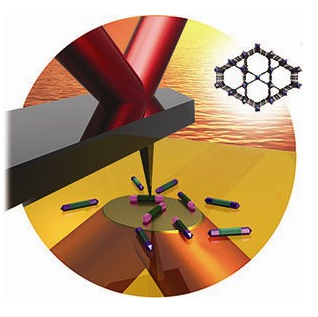
Anasys Instruments reports on a new publication from their nanoIR users at NIST which assess the chemical composition of a metal-organic framework with nanoscale resolution. The publication may be accessed in the leading journal “Angewandte Chemie International Edition.”
Researchers from the NIST Center for Nanoscale Science and Technology (CNST), in collaboration with researchers from University of Lyon, France, have applied a novel microscopy technique to characterize metal-organic framework (MOF) materials, potentially opening a pathway for engineering the chemical properties of these materials at the nanoscale.* MOFs are composed of metal ions connected by organic linker molecules to form 3D-crystalline networks of nanopores with....
Traditional learning environments are becoming digital classrooms
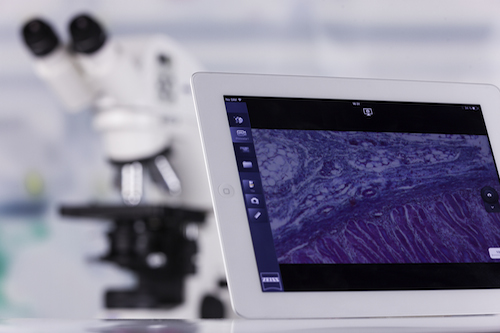
ZEISS launches its new iPad imaging app Labscope at Analytica 2014 in Munich. The app communicates with ZEISS microscopes that have the new version of the microscope camera Axiocam ERc 5s. The iPad accesses the microscope camera via WiFi. This allows users to view the live image in high definition (HD) on the iPad and to take pictures. In the digital learning environment, multiple users can access a microscope at the same time using an iPad and thus see the same image. This is especially useful for substantive work and joint discussion of the microscope images in training....
The latest products to be introduced by electrophoresis specialists CLEAVERSCIENTIFIC (CSL) are their new gel documentation and analysis systems omniDOC and omniDOCi.
These units provide researchers with a quick, simple and flexible solution for their gel documentation needs in a compact and affordable bench-top unit. The integral 5 megapixel camera combined with CSL basic gel analysis software ensures a perfect image every time along with the provision for image analysis. By providing many of the features used by leading gel documentation brands, but without the added price premium, each omniDOC system provides a simple yet sophisticated imaging solution for most laboratories and most budgets....
The fastest, most productive and reliable platform in the market is now enhanced with ready-to-use (RTU), optimized staining kits and integrated barcode reading.
Quality-controlled RTU H&E staining kits, lead to consistent high-quality staining up to 2000 slides per kit. The flexibility of the system also allows optimization of protocols meeting the specific diagnostic requirements. Chris Koeman, CEO Sakura Finetek Europe, states, “This is a great advancement of the SMART Automation portfolio. Thestaining and coverslipping platform has an impressive track record with a market leading installed base of more than a thousand systems, and the best Mean Time Between Failures....
150 life scientists from 23 countries met at the VIB in Ghent
In cooperation with the Flanders Institute of Biotechnology (VIB) and Core for Life, ZEISS invited the international community of correlative microscopists for 3 days to a joint workshop at the Bioimaging Core of the VIB Inflammatory Research Centre (IRC) in Ghent, Belgium. The workshop followed the first meeting of the community at the ZEISS Microscopy Labs Munich in 2012. From 9-11 March 2014, 150 scientists from 23 countries took the opportunity to discuss the current state of the art in correlative microscopy and 3D imaging techniques....
The latest generation freeze drying microscope, Lyostat4, offers superior LED illumination for a sharper image and reduced maintenance. Its new design also reduces footprint.
Freeze drying microscopy is an established technique for accurately and easily establishing the point of collapse, the most important critical temperature for developing safe and robust freeze drying cycles. Essentially operating as a micro freeze-dryer, FDM enables freezing and drying of a real sample to be observed in real time. As FDM analysis is based on visual identification rather than thermal data, it’s vital to ensure maximum image clarity and resolution. The Lyostat 4 provides the latest generation LED light source for even sharper image....
Capable of rapidly scanning large areas and miles of piping, FLIR's GF320 OGI camera finds gas leaks fast.
Designed as a preventative maintenance solution for the oil and gas industry, the GF320 Optical Gas Imaging (OGI) camera from FLIR Systems provides an easy-to-use tool for spotting leaks in tanks, pipelines and facilities. As a result the camera improves safety and profitability as well as minimizing emissions with less risk of business interruption due to actions from regulatory agencies....
Read MoreOS-Z Mounts Provide Stability For Many Types of MirrorApr 9, 2014
Optical Surfaces has announced the new OS-Z range of mirror mounts.
OS-Z mirror mounts were developed to support off-axis paraboloid, spherical and flat mirrors in a manner that allows overcoming a number of constrains imposed by general purpose mounts. Two key advantages gained by using an OS-Z mount are rapid alignment using an optional pre-alignment aid and the ability to routinely accommodate wedge back and parallel back mirrors. In addition, in applications where long term stability and stress-free mounting are important, special factory fitted features allow this to be easily achieved...
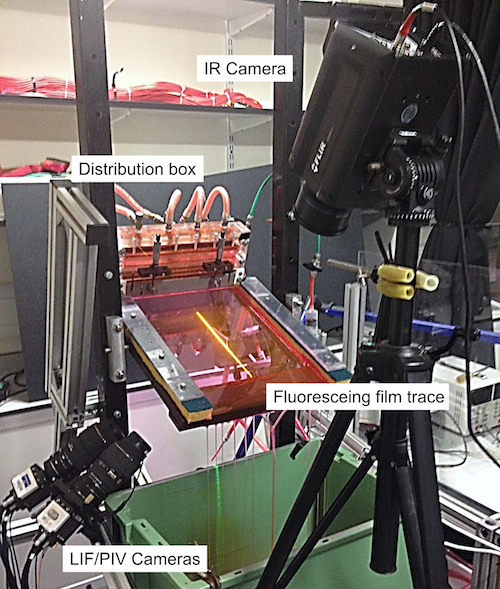
The Department of Chemical Engineering at Imperial College London (UK) has elected to use a FLIR Systems X6540sc thermal imaging camera to conduct innovative heat transfer experiments on thin-film flows.
Research within the Clean Energy Processes group at the Chemical Engineering Department of Imperial College London is aimed at the development and employment of new imaging techniques for conducting simultaneous spatiotemporal measurements of thickness, velocity, temperature and heat flux in thin-film flows. Apart from the purely theoretical interest, the high surface-to-volume ratio and small heat and mass transfer resistances of thin films at relatively small flow rates renders them instrumental in the development of efficient means of heat and mass transfer...
Read MoreBespoke Camera Systems for the Nuclear IndustryApr 7, 2014
Resolve Optics Ltd. reports that it has supplied a number of non-browning zoom lens to Custom Cameras Ltd (Wells, UK) to enable the company to supply fully integrated radiation tolerant camera systems for monitoring applications in the Nuclear industry.
In highly radioactive environments where camera servicing or replacement is not an option - Custom Cameras sought a proven supplier of high performance, radiation tolerant zoom lenses. Tony Moon, Sales Director of Custom Cameras commented “Over the last 10 years we have purchased non-browning 3x and 6x zoom lens from Resolve Optics enabling us to provide optimised remote camera systems for applications including inspection of nuclear fuels rods for oxidation, deterioration or damage ; checking the integrity of nuclear fuel chambers and monitoring low level radioactive storage containers”...
Read MoreJPK reports on the use of the ForceRobot system to study the dynamics of biomacromolecules at Nanjing UniversityApr 7, 2014
JPK Instruments reports on the study of how force regulates the structures and conformational dynamics of biomacromolecules using AFM-based single molecule force spectroscopy.
JPK Instruments, a world-leading manufacturer of nanoanalytic instrumentation for research in life sciences and soft matter, reports on the study of how force regulates the structures and conformational dynamics of biomacromolecules using AFM-based single molecule force spectroscopy, a project of Professor Yi Cao of Nanjing University. Professor Yi Cao is a member of the Institute of Biophysics located in the Physics Department of Nanjing University....
Albuquerque team designs unique, high-speed hyperspectral microscope to visualise membrane receptor dynamics at the molecular level in living cells
A unique hyperspectral microscope (HSM) designed specifically to visualise molecular-level protein-protein interactions in living cells has been unveiled recently by the University of Albuquerque. Designed around an Andor iXon 860 high-speed EMCCD detection system to record these profoundly challenging nanometer-scale events, the microscope delivers an unprecedented combination of speed, sensitivity and spectral detection. The novel design of the HSM provides acquisition rates of 27 fps over a 28 square micrometre field of view with each pixel collecting 128 spectral channels, allowing the determination of stoichiometry and dynamics of small oligomers unmeasurable by any other technique...
A customer application note from FLIR Systems describes how BP Chemicals is using its Optical Gas Imaging (OGI) cameras for the visualisation and documentation of gas leaks.
Effective leak detection is a priority at BP Chemicals manufacturing sites and is one of a number of procedures used for ensuring safe operation. This application note describes the experiences of technologists at BP Chemicals flagship manufacturing and process research site at Saltend, UK. Three FLIR Systems OGI cameras were employed to check plant integrity at the Saltend site. Designed for outdoor use - the FLIR OGI camera was used to detect a range of gases including methane and methanol that are both predominant at the UK plant...
Optical Surfaces Ltd. has been selected by a leading spectrophotometer manufacturer to supply ultra high precision matched beamsplitter / compensator optics for the interferometer that lies at the heart of its High Resolution FT-IR system.
To achieve this outstanding performance Optical Surfaces is manufacturing the 100mm diameter OA grade fused silica beamsplitter and compensator optics with a surface accuracy of lambda / 20 (p-v) and wavefront error in transmission of lambda / 20 (p-v) at 633nm. Further each beamsplitter / compensator pair is tightly matched in thickness and wedge angle. Dr. Aris Kouris, sales and marketing manager at Optical Surfaces Ltd. commented "High resolution spectroscopy places great demands on being able to achieve leading edge specifications with the interferometer optics...
Kromek announces that it has secured $845,000 of new orders to supply radiation detectors and integrated electronic components to a globally leading Original Equipment Manufacturer
Kromek, a supplier of patented radiation detection technologies to the medical, security and nuclear markets, announces that it has secured $845,000 of new orders to supply radiation detectors and integrated electronic components to a globally leading Original Equipment Manufacturer (‘OEM’) operating in the Dual Energy X-ray Bone Mineral Densitometry (‘DEXA BMD’) market. The total booking this fiscal year from this customer now exceeds $1.25 million...
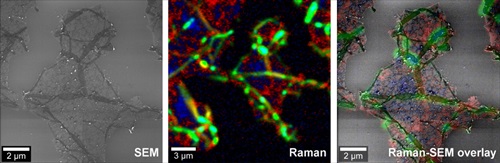
The RISE Microscope enables for the first time the acquisition of SEM and Raman images from the same sample area and the correlation of ultra-structural and chemical information with one microscope system
RISE Microscopy is a novel correlative microscopy technique which combines confocal Raman Imaging and Scanning Electron (RISE) Microscopy within one integrated microscope system. This unique combination provides clear advantages for the microscope user with regard to comprehensive sample characterization: electron microscopy is an excellent technique for visualizing the sample surface structures in the nanometer range; confocal Raman imaging is an established spectroscopic method used for the detection of the chemical and molecular components of a sample. It can also generate 2D- and 3D-images and depth profiles to visualize the distribution of the molecular compounds within a sample...
Read MoreMonitoring pharmaceutical products with Phenom desktop SEMMar 24, 2014
In the pharmaceutical industry, pharmaceutical dosage forms are getting increasingly important as a basis for making more effective drugs. In the successful development of a new dosage form, formulation development typically plays a crucial role in the introduction and application of state of-the-art pharmaceutical technology.
The manufacturability and/or bioavailability of many of these dosage forms regularly depend on the characteristics of the individual ingredients. It is for this reason, that it is extremely important that the bulk characteristics of so-called particulate systems such as powders and suspensions can be accurately monitored....
Stakeholder collaboration will be crucial to convert these developments into clinically meaningful tests
Tremendous advances in electronics, optics, fluorescent tools, and molecular biology have made live cell imaging technologies more accessible to life scientists looking to understand biological dynamics and visualize cellular events in organisms. The foray of omics technologies and nanotechnologies into mainstream medicine has already enabled commercial lab-on-a-chip microfluidics systems that analyse cells, DNA, RNA and proteins. As live cell imaging evolves, it will become an integral part of disease diagnostics and drug discovery processes....
Read More




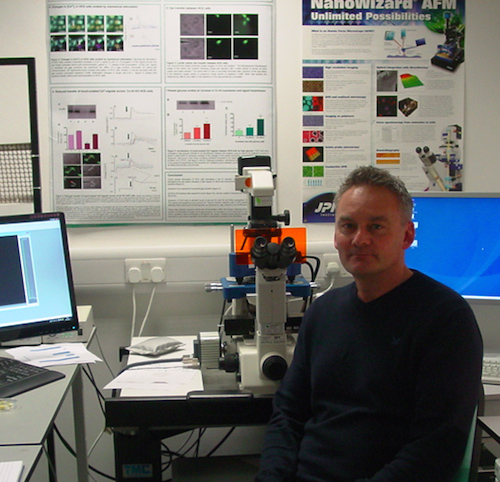 Dr Paul Squires and Dr Claire Hills from the School of Life Sciences (SLS) at the University of Warwick have international expertise in cell biology, signalling and endocrinology. They are using the JPK CellHesion® 200 system (funded by Diabetes UK) to nurture multi-disciplinary research between SLS and the School of Engineering (Dr K-K Liu) in addition to external collaborations, e.g. Professor Peter Jones (King’s College London). The innovative nanotechnology is being used to explore a range of problems in biomedicine, biology and pharmacokinetics related to the field of energy homeostasis and diabetes...
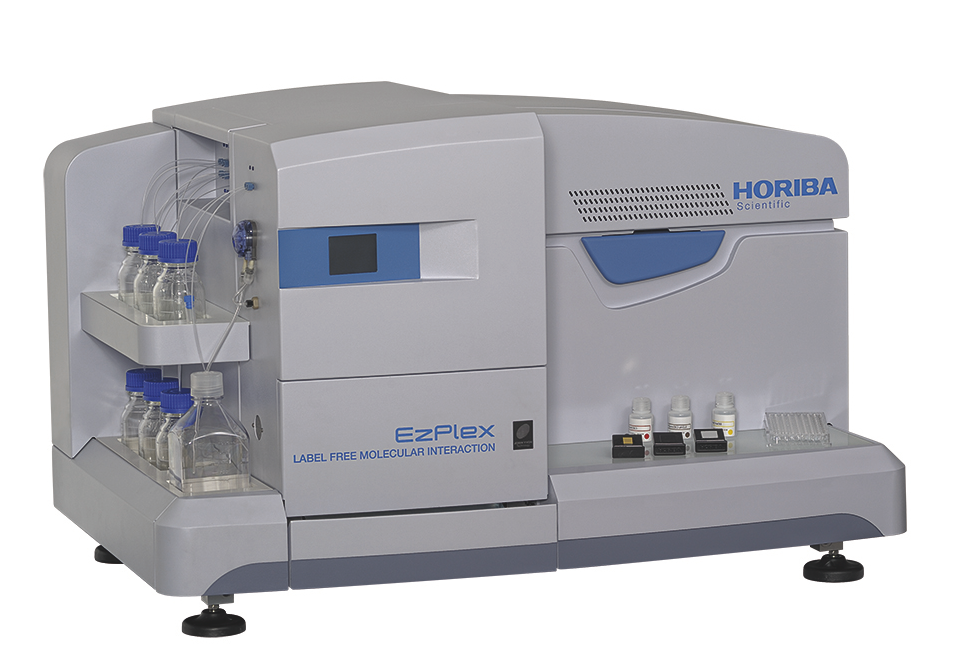 EzPlex gives quantitative and qualitative information on multiplex molecular interaction assays involving oligonucleotides, oligosaccharides, proteins, antibodies, aptamers or even cells and bacteria. The imaging capability dramatically enhances the throughput of conventional SPR and allows from few up to several hundred molecular interactions to be screened and characterized simultaneously. Interaction kinetic profiles can be obtained within minutes and give precious data about binding strength, kinetics and affinity....
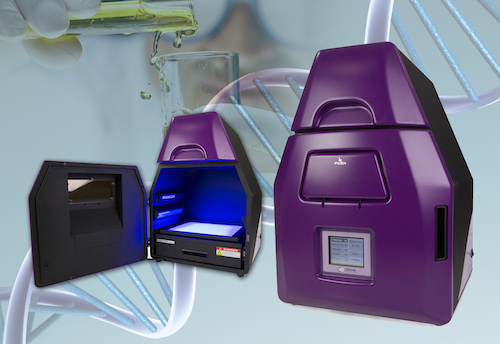 These units provide researchers with a quick, simple and flexible solution for their gel documentation needs in a compact and affordable bench-top unit. The integral 5 megapixel camera combined with CSL basic gel analysis software ensures a perfect image every time along with the provision for image analysis. By providing many of the features used by leading gel documentation brands, but without the added price premium, each omniDOC system provides a simple yet sophisticated imaging solution for most laboratories and most budgets....
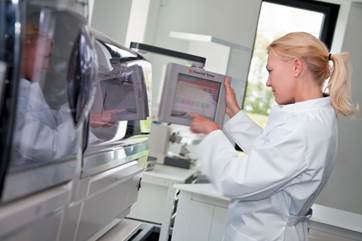 Quality-controlled RTU H&E staining kits, lead to consistent high-quality staining up to 2000 slides per kit. The flexibility of the system also allows optimization of protocols meeting the specific diagnostic requirements. Chris Koeman, CEO Sakura Finetek Europe, states, “This is a great advancement of the SMART Automation portfolio. Thestaining and coverslipping platform has an impressive track record with a market leading installed base of more than a thousand systems, and the best Mean Time Between Failures....
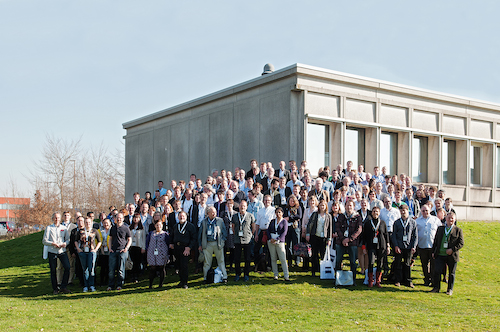 In cooperation with the Flanders Institute of Biotechnology (VIB) and Core for Life, ZEISS invited the international community of correlative microscopists for 3 days to a joint workshop at the Bioimaging Core of the VIB Inflammatory Research Centre (IRC) in Ghent, Belgium. The workshop followed the first meeting of the community at the ZEISS Microscopy Labs Munich in 2012. From 9-11 March 2014, 150 scientists from 23 countries took the opportunity to discuss the current state of the art in correlative microscopy and 3D imaging techniques....
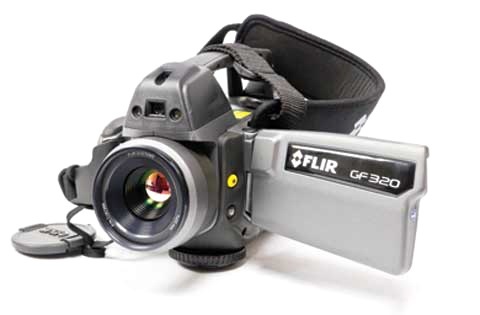 Designed as a preventative maintenance solution for the oil and gas industry, the GF320 Optical Gas Imaging (OGI) camera from FLIR Systems provides an easy-to-use tool for spotting leaks in tanks, pipelines and facilities. As a result the camera improves safety and profitability as well as minimizing emissions with less risk of business interruption due to actions from regulatory agencies....
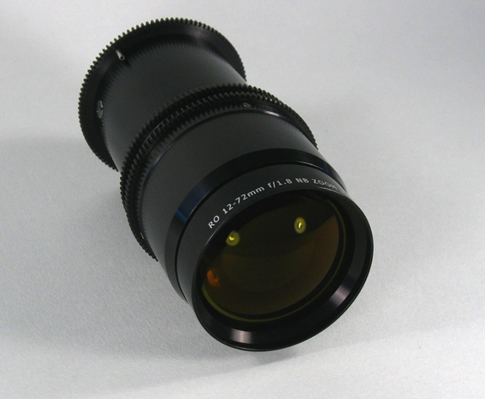 In highly radioactive environments where camera servicing or replacement is not an option - Custom Cameras sought a proven supplier of high performance, radiation tolerant zoom lenses. Tony Moon, Sales Director of Custom Cameras commented “Over the last 10 years we have purchased non-browning 3x and 6x zoom lens from Resolve Optics enabling us to provide optimised remote camera systems for applications including inspection of nuclear fuels rods for oxidation, deterioration or damage ; checking the integrity of nuclear fuel chambers and monitoring low level radioactive storage containers”...
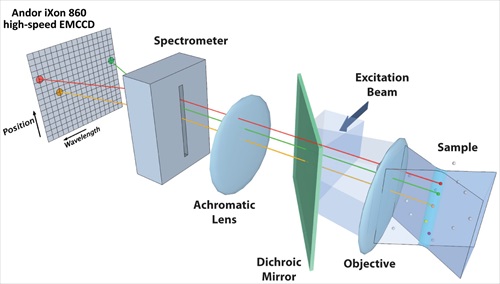 A unique hyperspectral microscope (HSM) designed specifically to visualise molecular-level protein-protein interactions in living cells has been unveiled recently by the University of Albuquerque. Designed around an Andor iXon 860 high-speed EMCCD detection system to record these profoundly challenging nanometer-scale events, the microscope delivers an unprecedented combination of speed, sensitivity and spectral detection. The novel design of the HSM provides acquisition rates of 27 fps over a 28 square micrometre field of view with each pixel collecting 128 spectral channels, allowing the determination of stoichiometry and dynamics of small oligomers unmeasurable by any other technique...
 Effective leak detection is a priority at BP Chemicals manufacturing sites and is one of a number of procedures used for ensuring safe operation. This application note describes the experiences of technologists at BP Chemicals flagship manufacturing and process research site at Saltend, UK. Three FLIR Systems OGI cameras were employed to check plant integrity at the Saltend site. Designed for outdoor use - the FLIR OGI camera was used to detect a range of gases including methane and methanol that are both predominant at the UK plant...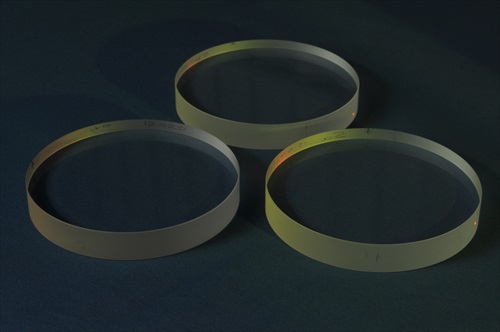
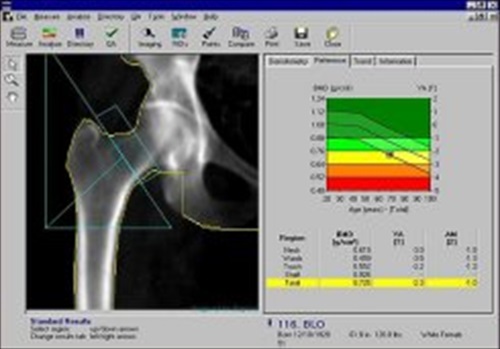 Kromek, a supplier of patented radiation detection technologies to the medical, security and nuclear markets, announces that it has secured $845,000 of new orders to supply radiation detectors and integrated electronic components to a globally leading Original Equipment Manufacturer (‘OEM’) operating in the Dual Energy X-ray Bone Mineral Densitometry (‘DEXA BMD’) market. The total booking this fiscal year from this customer now exceeds $1.25 million...