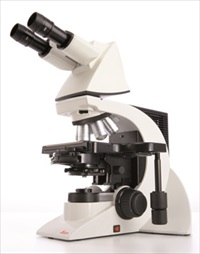
Leading UK digital clinical imaging specialists, Vision Source, announce their appointment as Leica Biosystems authorized distributors for their clinical microscopes.
Vision Source is very pleased to announce their appointment as UK authorized distributors for Leica Biosystems range of clinical microscopes. Further to acquiring assets and the hiring of staff from former dealers, Optivision, Vision Source are committed to a seamless integration of Leica's products into their portfolio offering users old and new continued excellent service and support. Product specialist, David Knipe, heads up this new business division for Vision Source...
Lacerta Technology are delighted to announce that due to improvements in manufacturing and supplier agreements they are able to reduce the price of their popular Humidity Controller by around 25%.
Humidity as an experimental variable in thermal, microscopy and rheological experiments is well known and an important parameter to control or measure. Lacerta Managing Director Dr John Duncan says “We are always looking for ways of improving the value we provide to our customers and I am delighted that we can pass on the savings we are making in the factory directly to the scientist in the laboratory...
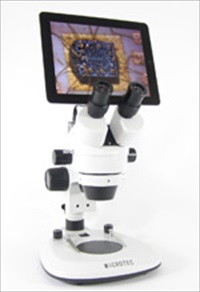
Tec Microscopes, suppliers of the MICROTEC range of light microscopes and accessories, is pleased to announce the MICROTEC ScopePad, a 5 megapixel digital microscope camera.
Tec Microscopes announce the MICROTEC ScopePad 5 megapixel digital microscope camera combined with a 9.7" display screen. It provides digital imaging, storage and transmitting and is equipped with stable, easy-to-use software. The camera has a 1/2.5 CMOS sensor offering 5 megapixels with selectable resolution, e.g. it may capture images at thirty frames per second at full resolution. It comes with a C-mount fitting enabling it to be easily attached to any make of microscope with the C-mount 0.5x adapter...
Olympus introduces new advanced optical modules for increased flexibility in its inverted microscope frame design.
The IX3 series can now be further optimised for a wider range of live cell imaging applications including in vitro fertilisation, with motorised functionality for accuracy and easy operation. Extending the capabilities of the fully customisable IX3 inverted microscope frame, Olympus has expanded its range of compatible, interchangeable optical modules. Ease-of-use and accuracy are vastly improved via new motorised components, which also present a cost-efficient means to gradually upgrade to a fully motorised microscope system....
Olympus will exhibit its BX3 upright microscope systems and VS120 virtual slide scanner at ECP 2013. Designed specifically to meet the needs of a range of pathology applications, the systems ensure robust diagnosis and discovery alongside ergonomic operation.
Enhancing the workflow of research and diagnostic centres alike, the latest range of Olympus pathology microscope systems and accessories will be on show at the 25th European Congress of Pathology (ECP) 2013, 31 August – 4 September in Lisbon, Portugal. Delegates can visit booth 14 to view the Olympus BX3 range of upright microscopes and the Olympus VS120 virtual slide scanner...
Scientific Digital Imaging’s [AIM:SDI] Syngene Division, a world- leading manufacturer of image analysis solutions, is delighted to announce that one of its G:BOX Chemi imaging systems is being used at Maastricht University in The Netherlands as part of their science bachelors programme to train students how to rapidly master a range of molecular biology imaging techniques.
Students at the Chemelot Campus of Maastricht University are using a G:BOX Chemi system to accurately image proteins extracted from mosses, tropical leaves and insects run on Coomassie blue stained gels or blotted onto chemi-luminescent Western blots. This approach is allowing the students to quickly and easily analyse a range of proteins seen in the natural environment...
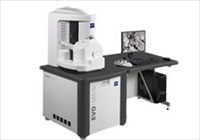
Advances to the Scanning Electron Microscope ZEISS EVO presented at Microscopy and Microanalysis 2013 Meeting
At M&M 2013, Indianapolis, ZEISS launches the next generation EVO series for material and life science applications. Customer productivity and imaging performance are dramatically increased by the SEM’s workflow automation, beam deceleration technology and class leading HD BSE detector. EVO reduces a typical workflow from over 400 steps to just 15. Workflow productivity is improved by automated image settings such as the beam alignment, magnification and focus, allowing the imaging of areas of interest in the shortest possible time...
Bruker introduces two new instruments which further expand its portfolio of high-performance tools for materials characterization in electron microscopes
XSense™ is a novel parallel beam wavelength dispersive X-ray spectrometer (WDS) for elemental analysis on scanning electron microscopes (SEM). Specifically designed for the lower energy range between 100 and 3,600 eV, the XSense spectrometer provides energy resolution down to 4 eV, enabling both excellent separation of closely spaced X-ray lines and highly sensitive trace element detection. XTrace™ is a new micro-spot X-ray source that enables photon-induced micro X-ray fluorescence (micro-XRF) spectrometry on SEM systems, in conjunction with Bruker’s energy dispersive X-ray spectrometer (EDS) detectors...
Read MoreNanounity announces that the Delmic SECOM correlative microscopy system has won a 2013 Microscopy Today Innovation AwardAug 30, 2013
Nanounity announces that their partners, Delmic BV, have won one of the ten 2013 Microscopy Today Innovation Awards for their release of the SECOM correlative microscopy system. The award presentation ceremony is being made today at the Microscopy & Microanalysis meeting in Indianapolis, USA.
Each year, the publication, Microscopy Today under the stewardship of its editor, Dr Charles Lyman from Lehigh University, make awards at the annual Microscopy & Microanalysis meeting. In 2013, the meeting is being held in Indianapolis with awards going to companies in the following product areas: light microscopy, scanning probe microscopy, electron microscopy and microanalysis. Two additional awards go to innovative technologies not already covered...
NanoSight reports on how Nanoparticle Tracking Analysis, NTA, is being used at St George's, University of London, to explore extracellular vesicles as a potential source of biomarkers, by identifying proteins or peptides differentially expressed between healthy subjects and patients with rare inherited diseases.
St George's, University of London, is the UK's only independent medical and healthcare higher education institution. Dr Bridget Bax is a senior research fellow in the Clinical Sciences Division where the main focus of her group's research is to improve the understanding of the pathogenic mechanisms of rare inherited diseases and to develop novel therapies for translation into the clinical setting. One of their major areas of interest is the identification and validation of biomarkers in patients with the rare and fatal disease mitochondrial neurogastrointestinal encephalomyopathy (MNGIE)...
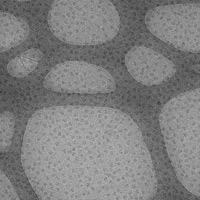
Agar Scientific, a leading supplier of microscopy accessories and consumables, has launched a new range of graphene oxide support films which have been developed in collaboration with Dr Neil Wilson, Microscopy Group, Physics Department at the University of Warwick.
As a leading supplier of accessories for microscopy, Agar Scientific is particularly well known for its high quality support films for TEM. New to the range is Graphene oxide (GO) which provides a thinner support film of higher mechanical strength, electrical and thermal conductivity compared to support films made from other materials. Agar GO support films are available on holey and lacey carbon and Quantifoil® support films. Other grid types will be available soon...
High throughput staining applications in histology
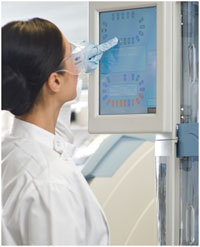
This new advanced automated stainer offers significant improvements in workflow optimization, particularly when multiple protocols are used. It has been intelligently designed to be easier to use than ever, with a new touch screen interface and intuitive software. Gemini AS has an all-new touchscreen interface that is intuitive to use and makes day-to-day operation simplicity itself. A glance is all that is needed to check the batch stain progress. New LED lighting allows the operator a clear view of what is going on inside the staining area. It is also fully compatible with the Thermo Scientific range of coverslippers to match the workflow of modern high-throughput laboratories...
Optical Surfaces Ltd. (OSL) has produced its ‘Practical Guide to Surface Quality’ – the second in a series of practical guides for optics users.
The informative new 12-page guide is written to enable scientists and engineers better understand an optics quoted surface quality as surface imperfections are typically the most misunderstood, misinterpreted, and ambiguous of all optical specifications. Key reasons why surface quality is an important consideration in selecting optics are associated with cosmetic acceptability and often more importantly with the functionality / performance of the component. The presence of defects on the surface of an optical component can scatter light which in some circumstances may affect its performance...
Caltech engineers show how to make cost-effective, ultra-high-performance microscopes
Engineers at the California Institute of Technology (Caltech) have devised a method to convert a relatively inexpensive conventional microscope into a billion-pixel imaging system that significantly outperforms the best available standard microscope. Such a system could greatly improve the efficiency of digital pathology, in which specialists need to review large numbers of tissue samples. By making it possible to produce robust microscopes at low cost, the approach also has the potential to bring high-performance microscopy capabilities to medical clinics in developing countries....
NanoSight, world-leading providers of unique nanoparticle characterization technology, announces that more than 800 third party publications citing their Nanoparticle Tracking Analysis (NTA) methodology have been published, and reflect on the significance of this powerful third party endorsement.
May 2013 saw publication of the 800th peer-reviewed paper citing NTA. It was written by Mark Davis and his group at Caltech: "Transcytosis and brain uptake of transferrin-containing nanoparticles by tuning avidity to transferrin receptor." It was published in the Proceedings of the National Academy of Sciences of the United States of America....
Multi-ion beam platform from ZEISS enables new solutions for the challenges faced in nanofabrication
At the Microscopy & Microanalysis trade show in Indianapolis, ZEISS ORION NanoFab received the 2013 Microscopy Today Innovation Award. Microscopy Today magazine annually presents this award to techniques and instruments that play a major role in progressing the field of microscopy. ORION NanoFab is a nanofabrication tool that integrates helium, neon, and gallium focused ion beams on a single platform. The helium and neon ion beams are based on the gas field ion source (GFIS) technology...
HORIBA Jobin Yvon S.A.S. (Palaiseau, France), operating worldwide under the name of HORIBA Scientific, is pleased to announce its recent agreement with AIST-NT (Novato, CA, USA) to distribute their Scanning Probe Microscope (SPM) product line in most of Europe, China and South America.
AIST-NT is a manufacturer of advanced SPM systems designed specifically for integration with optical spectroscopy, and has been a partner of HORIBA Scientific for AFM-Raman and Tip Enhanced Raman Spectroscopy (TERS) system integration for several years. HORIBA Scientific is a leading spectroscopy equipment manufacturer, and is the leader in Raman microscopy. With the growing interest for nano-spectroscopy and TERS, HORIBA Scientific has collaborated with several SPM manufacturers to deliver a wide range of combined solutions...
Anasys Instruments reports on the announcement from the University of Illinois which describes the effect of nanometer-scale heating on semiconductor plasmonic microparticles which reveal surface plasmon resonance. The work is described in a paper published in Applied Physics Letters.
Recent progress in the engineering of plasmonic structures has enabled new kinds of nanometer-scale optoelectronic devices as well as high-resolution optical sensing. But until now, there has been a lack of tools for measuring nanometer-scale behavior in plasmonic structures which are needed to understand device performance and to confirm theoretical models...
Agar Scientific, a leading supplier of microscopy accessories and consumables, has launched a new web site. As well as providing the latest microscopy news about accessories and consumables, the site now offers customers full eCommerce capability – a site that delivers useful, current content digitally online.
Agar Scientific's new website presents visitors with comprehensive and current information on all products together with availability, delivery options and prices to enable straightforward online ordering of materials for their laboratory. Visitors can now request online quotations. This has been specifically tailored for education/research departments where detailed purchase requisitions are frequently required prior to ordering. As would be expected, the new site brings visitors the latest news about new products, special offers including end of line bargains. It also offers sign-up for Agar news and electronic newsletters, particularly for exclusive offers...
Leica LMT260 XY Scanning Stage for a Repeatability of 0.25 µm at a Resolution of 5 nm
Leica Microsystems launches a high-precision scanning stage for stereo microscopes and macroscopes, the Leica LMT260 XY Scanning Stage. To ensure successful experiments, it offers a repeatability of 0.25 µm for samples weighing less than 0.5 kg, and of 1 µm for heavier loads of 1.5 kg. This repeatability is reached at a resolution of 5 nm. Such precision is especially interesting for users who perform time-lapse experiments such as mark and find, or multi-well screenings. "We know that every micrometer counts when imaging several samples at different XY positions", says Dr. Björn Fuchs, Product Manager, Leica Microsystems...
Multi-mode microplate readers are an indispensable laboratory instrument that enable many applications to be performed on multiple samples.
Life science applications involving cells are increasingly desired due to higher biological relevance associated with functional readouts. Microplate readers can provide quantification of a specific target, such as a protein or its post-translational modification, or phenotypes such as cell death through apoptosis or necrosis. Quantification is provided relative to assay controls and/or standards using dispersive optical detection and light collection with photomultiplier tubes (PMT)...
Xmark Media the organisers of Photonex 2013, the UK's showcase photonics conference & exhibition announce the programme and speakers for the meeting on Nano and Bio-Imaging. This FREE-to-attend conference will be held on Wednesday 16th October as part of a diverse two-day event at the visitor-friendly Ricoh Arena in Coventry.
Significant advances in the development of optical techniques have led to an inter-disciplinary use of photonics in the study of various problems in the life sciences, in biological and chemical sciences, in medicine, clinical sciences, neurophysiology etc. Researchers are continually looking for better ways to analyse complex processes....




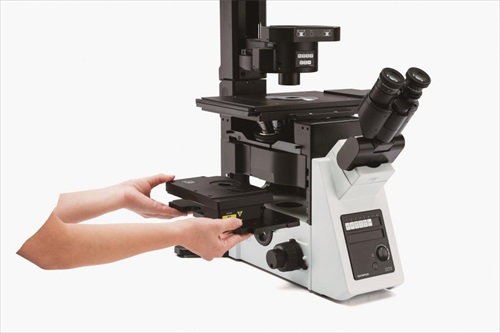 The IX3 series can now be further optimised for a wider range of live cell imaging applications including in vitro fertilisation, with motorised functionality for accuracy and easy operation. Extending the capabilities of the fully customisable IX3 inverted microscope frame, Olympus has expanded its range of compatible, interchangeable optical modules. Ease-of-use and accuracy are vastly improved via new motorised components, which also present a cost-efficient means to gradually upgrade to a fully motorised microscope system....
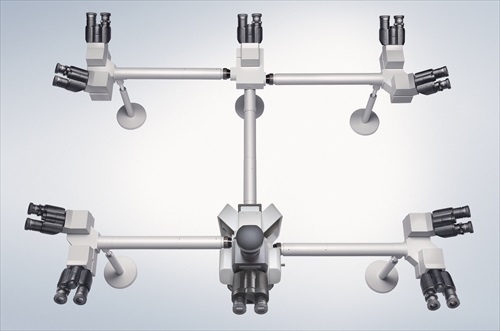 Enhancing the workflow of research and diagnostic centres alike, the latest range of Olympus pathology microscope systems and accessories will be on show at the 25th European Congress of Pathology (ECP) 2013, 31 August – 4 September in Lisbon, Portugal. Delegates can visit booth 14 to view the Olympus BX3 range of upright microscopes and the Olympus VS120 virtual slide scanner...
 XSense™ is a novel parallel beam wavelength dispersive X-ray spectrometer (WDS) for elemental analysis on scanning electron microscopes (SEM). Specifically designed for the lower energy range between 100 and 3,600 eV, the XSense spectrometer provides energy resolution down to 4 eV, enabling both excellent separation of closely spaced X-ray lines and highly sensitive trace element detection. XTrace™
 Each year, the publication, Microscopy Today under the stewardship of its editor, Dr Charles Lyman from Lehigh University, make awards at the annual Microscopy & Microanalysis meeting. In 2013, the meeting is being held in Indianapolis with awards going to companies in the following product areas: light microscopy, scanning probe microscopy, electron microscopy and microanalysis. Two additional awards go to innovative technologies not already covered...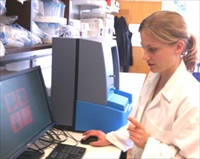

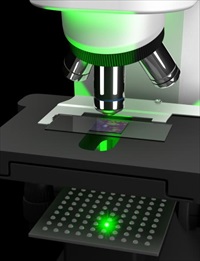 Engineers at the California Institute of Technology (Caltech) have devised a method to convert a relatively inexpensive conventional microscope into a billion-pixel imaging system that significantly outperforms the best available standard microscope. Such a system could greatly improve the efficiency of digital pathology, in which specialists need to review large numbers of tissue samples. By making it possible to produce robust microscopes at low cost, the approach also has the potential to bring high-performance microscopy capabilities to medical clinics in developing countries....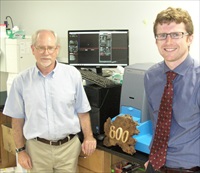

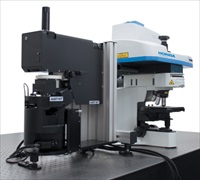 AIST-NT is a manufacturer of advanced SPM systems designed specifically for integration with optical spectroscopy, and has been a partner of HORIBA Scientific for AFM-Raman and Tip Enhanced Raman Spectroscopy (TERS) system integration for several years. HORIBA Scientific is a leading spectroscopy equipment manufacturer, and is the leader in Raman microscopy. With the growing interest for nano-spectroscopy and TERS, HORIBA Scientific has collaborated with several SPM manufacturers to deliver a wide range of combined solutions...
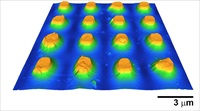 Recent progress in the engineering of plasmonic structures has enabled new kinds of nanometer-scale optoelectronic devices as well as high-resolution optical sensing. But until now, there has been a lack of tools for measuring nanometer-scale behavior in plasmonic structures which are needed to understand device performance and to confirm theoretical models...
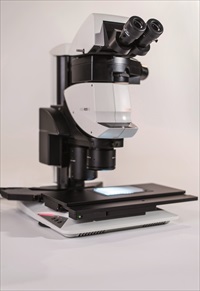 Leica Microsystems launches a high-precision scanning stage for stereo microscopes and macroscopes, the Leica LMT260 XY Scanning Stage. To ensure successful experiments, it offers a repeatability of 0.25 µm for samples weighing less than 0.5 kg, and of 1 µm for heavier loads of 1.5 kg. This repeatability is reached at a resolution of 5 nm. Such precision is especially interesting for users who perform time-lapse experiments such as mark and find, or multi-well screenings.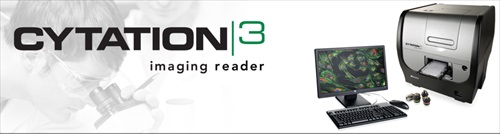
 Significant advances in the development of optical techniques have led to an inter-disciplinary use of photonics in the study of various problems in the life sciences, in biological and chemical sciences, in medicine, clinical sciences, neurophysiology etc. Researchers are continually looking for better ways to analyse complex processes....