

 This appointment became effective July 1, 2015. He succeeds Andries Peter Jan van den Broek who has left the company. Before joining Leica Microsystems, Markus Lusser was Vice President Global Sales and Customer Support with Sciex. Sciex produces analysis instruments and, like Leica Microsystems, belongs to the U.S. company, Danaher Corporation. Lusser holds an Electrical Engineering Degree in Telecommunications and Electronics from...
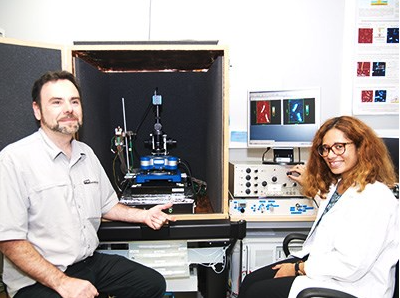 Drs Christophe Demaille and Agnès Anne from CNRS work in the Laboratoire d'Electrochimie Moléculaire at the Université Paris Diderot as Group Leaders of a research team aiming to probe electron transport and communication in nanometric biostructures. Their studies are performed at the single nano-object scale using combined atomic force (AFM)-Electrochemical (SECM) microscopy. In this combined microscopy technique, the tip acts...
 XEI Scientific has appointed a new distributor for the UK and Irish markets. Founded in 2012, EM Resolutions offers a wide range of consumables and accessories for the electron microscopy market place. Steve Cham, Sales Director of EM Resolutions, is excited by the prospect of teaming up with XEI. “XEI is the technology leader with their Evactron De-Contaminator systems. The products are a natural fit to our current portfolio and we are confident...
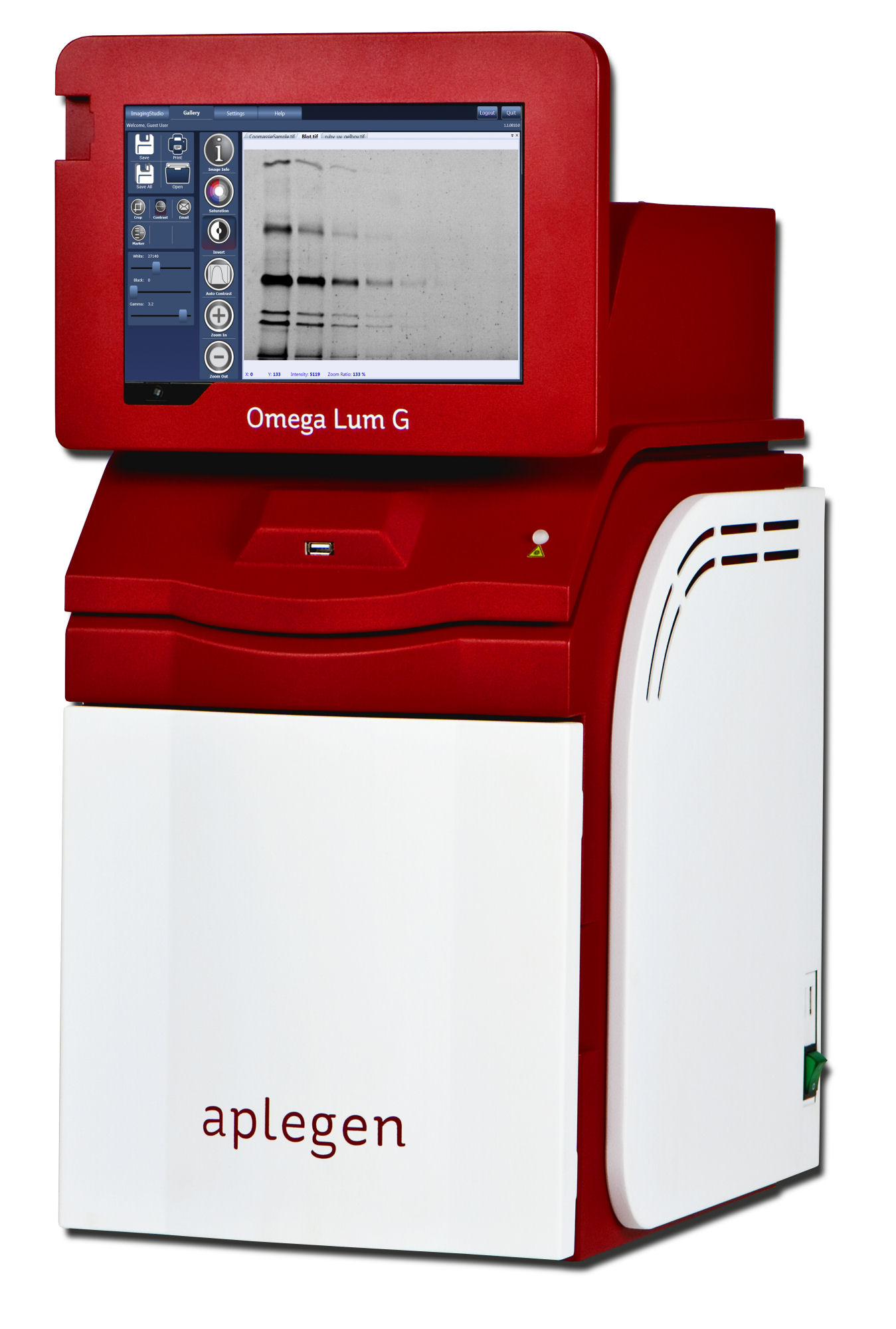 It comes complete with everything you need. Simply unpack it to get started capturing images of your gels and blots quickly. What will also surprise most people is the incredible low cost for such a high specification system. As with all Aplegen systems it is powered by the intelligent SmartCapture Technology which simplifies imaging to the point where the user just has to pick an application and the image is automatically captured with the optimum exposure.
 This powerful, new software successfully analyses chromogenic agars from major media supplier, E & O Laboratories and means microbiologists can use ProtoCOL 3 and Protos 3 systems to quickly and simply identify and count pathogens cultured on chromogenic plates from E & O Laboratories and CHROMagar. The new Chromogenic ID software module, ensures that the ProtoCOL 3 and Protos 3 systems can, in seconds, precisely identify, and at the same time count any bacteria...
 New microscopy technologies, such as light sheet fluorescence microscopy (LSFM) or clearing methods, allow the imaging of large samples at high resolution or high frame rates. Handling, processing, and analyzing these multi-terabyte data sets has become increasingly difficult for scientists, e.g. in developmental biology and neuroscience. New tools are needed to overcome these challenges. Therefore, ZEISS has teamed up with arivis AG to offer complete...
 The Leibniz Institute for Plasma Science and Technology eV (INP Greifswald) is the largest non-university research institute conducting basic research into and investigating the applications of low temperature plasmas. In addition to the application-oriented basic research, the INP promotes the development of plasma-supported processes and products. The Institute conducts research and development from idea to prototype. Using an optimised...
 The patent pending laser autofocus design puts all the required components into a single, user-installable cube that can be added at any time to a new or existing system. Laser autofocus offers speed, reproducibility and lowered risk of phototoxicity and photobleaching. With both laser autofocus and image-based autofocus available in Cytation, the system offers an important advantage in imaging – the ability to use the most appropriate autofocus...
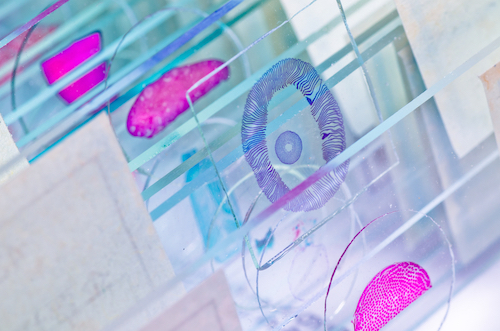 Made using a patent-pending process, CellMax™ Cell Pellet Slides have a highly consistent density and homogeneity across the entire cell pellet block that ensures you get accurate results time after time. Cells are harvested by a proprietary trypsin-free method preserving cell surface antigens and inflicting minimal physical damage that could lead to a loss of biomarkers. CellMax™ slides produce accurate and reproducible results...
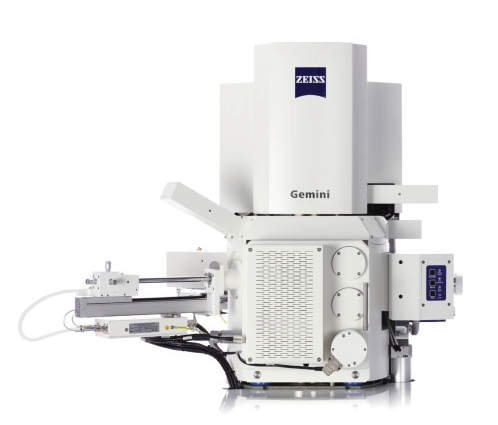 ZEISS celebrates the 50th anniversary of commercial scanning electron microscopy (SEM). In 1965, the first commercial SEM called Stereoscan was built by Cambridge Instrument Company, a UK based predecessor company of Carl Zeiss Microscopy Ltd. To mark the anniversary of this very first SEM sale 50 years ago, and celebrate the contributions to scientific research across so many fields and industries made possible through scanning electron microscopy...
 This FREE-to-attend conference will be held on Wednesday 14th October as part of the growing two-day event at the visitor-friendly Ricoh Arena in Coventry. Optical techniques are increasingly being used to perform high accuracy measurements in aerospace, automotive and precision manufacturing. One factor driving this growth is the industry need for higher product quality and increased production numbers. Another is the development of...
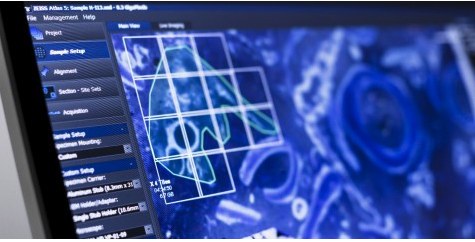 ZEISS Atlas 5 is a powerful hardware and software package that extends the capacity of ZEISS scanning electron microscopes (SEM) and focused ion beam SEMs (FIB-SEM). ZEISS Atlas 5 streamlines automatic image acquisition and lets users benefit from its efficient navigation and correlation of images from any source including light and X-ray microscopes. Taking full advantage of high throughput and automated large area imaging, users...
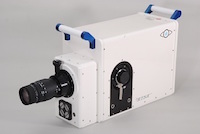 The Leibniz Institute for Plasma Science and Technology eV (INP Greifswald) is the largest non-university research institute conducting basic research into and investigating the applications of low temperature plasmas. In addition to the application-oriented basic research, the INP promotes the development of plasma-supported processes and products. The Institute conducts research and development from idea to prototype. Using an...
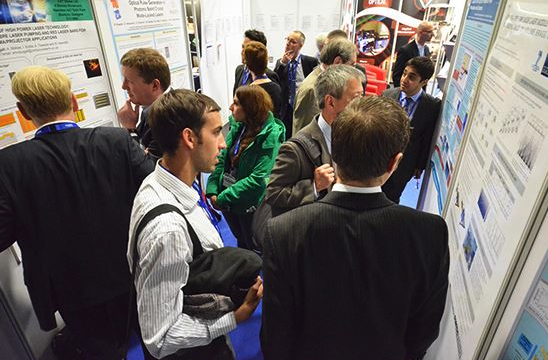 This FREE-to-attend conference will be held on Wednesday & Thursday 14th and 15th October as part of the growing two-day event at the visitor-friendly Ricoh Arena in Coventry. Significant advances in the development of optical techniques have led to an ever increasing role of photonics in the study of various problems in biological and chemical sciences, in medicine and clinical sciences. Researchers are continually looking for better ways to analyse...
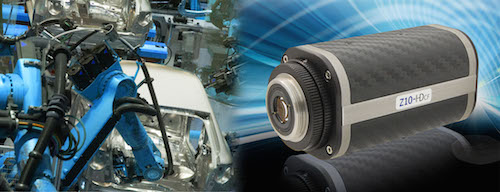 Over the last 20+ years, Resolve Optics Ltd has accumulated considerable experience of developing optimised fixed and zoom lenses for vision applications including parts recognition, precise component placement, automated alignment and placement and automated inspection of manufactured components. Drawing upon its team of experienced optical designers and engineers - Resolve Optics are able to design and produce specialist vision lenses...
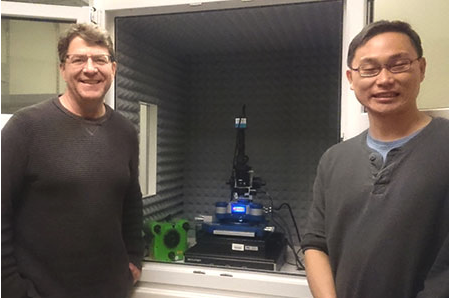 Dr. Phillip Messersmith is the Class of 1941 Professor in the Departments of Bioengineering and Materials Science and Engineering at the University of California at Berkeley. His research group is interested in understanding structure-processing- property relationships of materials in biological systems, and in using this information to inform the design, synthesis and application of biologically inspired synthetic materials used in a...
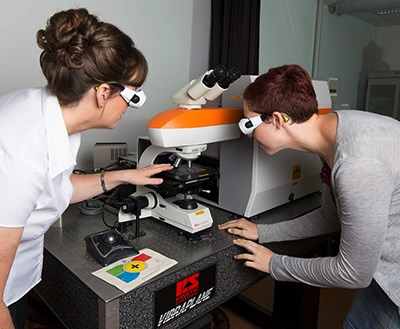 Dr Elizabeth Carter is Manager of the Vibrational Spectroscopy Core Facility, VSCF, at the University of Sydney. This professional services unit houses one of the largest concentrations of state-of-the-art Raman and FT-IR spectrometers in Australia. The research interests of facility users are diverse and applications include: nanotechnology; materials science; art and archaeology; polymer science; pharmaceutics; environmental; forensics; mineralogy and...
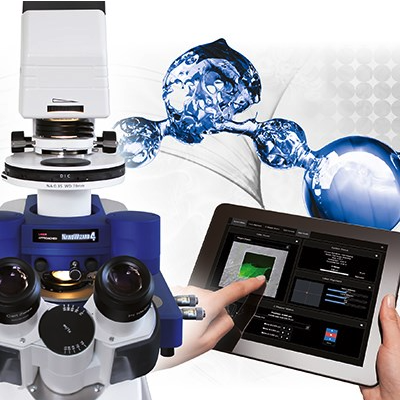 Working closely with their user base worldwide, JPK is pleased to announce their fourth generation AFM product, the NanoWizard® 4 BioScience AFM system. The pioneering manufacturers of nano solutions for life scientists have raised the bar in terms of technical performance to deliver a new applications-driven solution for users. It features fast scanning up to 70 Hertz line rate. Translated, this means users can follow dynamic processes with outstanding resolution...
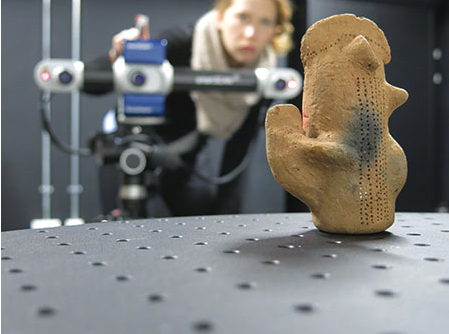 The EPSRC Centre for Doctoral Training in Science and Engineering in Arts, Heritage and Archaeology (SEAHA) is an 8-year initiative (2014-2022) to establish an infrastructure to meet challenges set by the heritage sector, industry and government. Analytik have joined this project as an industrial partner and student supervisor. Analytik are leading suppliers of portable and handheld spectrometers including Visible and Near-Infrared (Vis-NIR)...
 Leica Microsystems has launched two instruments of the laser microdissection microscope series, the Leica LMD6 and the LMD7, with LED illumination for transmitted light. Users can now choose between halogen and LED illumination. LEDs are an energy-efficient light source providing homogenous illumination and a constant color temperature. They also save energy, and their lifetime of up to 25,000 hours is longer than that of halogen lamps...