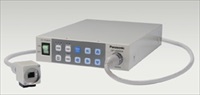
Leading UK digital clinical imaging specialists, Vision Source, announce their appointment as Panasonic's authorized specialist dealer for imaging products for use in the medical and life science environments.
Vision Source is very pleased to announce their appointment as UK authorized specialist dealer for Panasonic's imaging products from Industrial Medical Vision division. Further to acquiring assets and the hiring of staff from former dealers, Optivision, Vision Source are committed to a seamless integration of Panasonic's products into their portfolio offering users old and new continued excellent service and support....
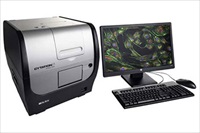
BioTek’s Cytation™3 Cell Imaging Multi-Mode Reader was recently honored with the first annual New Product Innovation Award, given by MipTec organizers at the 2013 MipTec Conference & Exhibition in Basel, Switzerland. Cytation3 was one of three winning products announced at the exhibition.
Cytation3 combines automated digital microscopy and conventional microplate multi-mode detection to provide both rich phenotypic and well-based quantitative analyses in a streamlined workflow. This unique, patent pending design is ideal for both cell-based and biochemical assays, and its modular architecture allows users to select the modes they need now, and easily upgrade as their needs evolve...
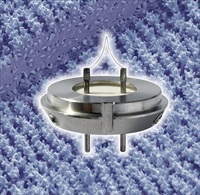
Agar Scientific, a leading supplier of microscopy accessories and consumables, has increased the production of their world-leading filaments for electron microscopy.
As a leading supplier of accessories for microscopy, Agar Scientific has a world-renowned reputation for the manufacture and supply of replacement filaments for many of the world's leading makes of electron microscopes. Now back in production are new and re-filamented, JEOL K Type filaments. Agar filaments are specifically designed for electron microscopes for the majority of the leading manufacturers including Cambridge/LEO/Zeiss, FEI, JEOL and Camscan. The filaments are made with specially designed jigs which ensure accuracy and reproducibility in production...
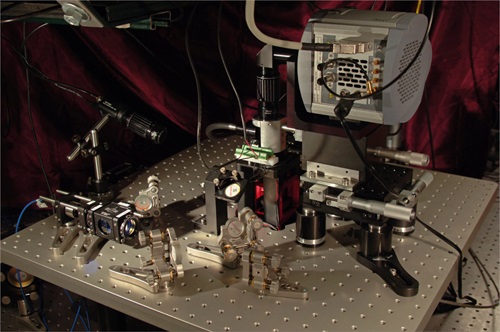
iXon EMCCD camera's exceptional low light performance opens the door to real-time implementation of atomtronics
Since the first demonstrations of Bose-Einstein condensation in 1995, ultra-cold matter has become a fertile and lively field of study. Research around the world is establishing a high level of understanding of the underlying physics for applications, such as inertial guidance systems, atomic clocks and quantum computing. Teams are also beginning to design and build compact, low-power instrumentation for handling ultra-cold atoms...
The new Olympus FluoView FVMPE-RS, a dedicated multiphoton microscope system, enables high-precision, ultra-fast scanning and stimulation, allowing researchers to see deep within specimens, take measurements at the highest speeds, and capture images, even when working under the most demanding conditions.
With its high speed and precision performance, the FVMPE-RS is designed for electrophysiology and optogenetics studies. It is also a good match for applications such as high-speed calcium and in vivo imaging, peristalsis and blood flow studies, mosaic imaging, connectomics and functional brain imaging, stem cell research, and any field that requires precise colocalisation, uncaging, simultaneous imaging/stimulation, extensive real-time signal processing, or multipoint mapping....
ZEISS has installed 13 systems worth over two million euros at Istanbul Medipol University as well as trained the staff there.
Various light microscopes, as well as stereo and confocal microscopes are in operation at the university's Regenerative and Restorative Medical Research Center now. At the same time, the university agreed to sign a cooperation agreement with ZEISS to hold joint workshops and training, as well as to introduce the new light sheet fluorescence microscope system Lightsheet Z.1 to Turkey...
IDRaman micro optimizes Raman microscopy data collection
Now available from Ocean Optics is the IDRaman micro, a compact microscope designed for Raman measurements in research, quality control and quality assurance environments. The IDRaman micro is a versatile, high-performance analytical tool for applications where sampling requires careful focus and high spatial resolution to optimize the Raman signal. The new instrument debuted September 29, 2013 at SciX 2013, an industry event that covers analytical chemistry, with an emphasis on emerging technologies. SciX, which was held in Milwaukee, Wisconsin, attracts a mix of scientific and engineering experts from around the world...
The software platform for advanced life science research, Leica Appplication Suite Advanced Fluorescence (LAS AF), originally launched in 2005 for Leica Microsystems' widefield and confocal microscope systems, has been released in its 3.2 version. This version focuses on 3D analysis, 3D measurements and 3D visualization. The 3D functionalities are especially interesting for users of Leica Microsystems' widefield super-resolution system Leica SR GSD 3D: They make GSD (Ground State Depletion) data visible as volume rendered images and therefore add a third dimension to super-resolution images. Further features include...
The global reaching partnership aims to provide clinical researchers with new biomarkers and validated image analysis protocols, ensuring a continuum from preclinical to clinical phase in the development of anticancer therapies
Oncodesign,a contract research laboratory dedicated to the discovery of new anticancer therapies, and Banook Central Imaging, a company specializing in the centralized reading of medical images, today announce the start of a partnership to expand the use of new approaches in pharmaco-imaging. The partners expect to share expertise, co-promote joint activities and jointly engage in scientific collaboration to standardize image acquisition and analysis protocols in early clinical phases. The financial details of the agreement were not disclosed...
Artemis CCD Limited, a leading manufacturer of cooled CCD cameras is delighted to announce the supply of OEM grade cooled CCD cameras to NeutronOptics for the application of Neutron imaging. Neutron imaging compliments x-ray radiography, especially for materials opaque to x-rays or where damage may occur. In both cases a "scintillator" film is used to convert the radiation to visible light that can then be imaged with a camera. But unlike x-rays, neutrons penetrate heavy metals, and even lead, to reveal structural details that are otherwise invisible, yet they are strongly scattered by light atoms such as hydrogen...
New Stain-Free Gel Visualisation Application of Syngene’s G:BOX System Helps Save Time and Make Protein Analysis Safer
Scientific Digital Imaging’s [SDI’s] Syngene Division, a world-leading manufacturer of image analysis solutions is delighted to announce that the lighting and filter conditions in the G:BOX image analysis system have been optimised to allow faster, safer visualisation of proteins on stain-free gels. Technical specialists at Syngene tested filter and lighting conditions in a G:BOX XR5 image analysis system to accurately image a range of proteins (2-300ng) run on a Criterion TGX Stain-Free gel. For optimum imaging performance, the gel was exposed to 5 minutes of mid wave UV (302nm) on a UV transilluminator and the gel was imaged using a UV filter and an exposure time of 2 seconds. The gel was then stained with ProtoBlue Safe and imaged again.
As part of the annual EMBO and EMBL events, Olympus will be showcasing the open source microscopy concept, led by the IX3 inverted microscope frames, optimised for life science research.
Demonstrating the very latest in live cell imaging technologies, Olympus will exhibit its range of IX3 inverted microscope frames with associated software and accessories at the upcoming European Molecular Biology Organisation (EMBO) Meeting 2013, taking place in Amsterdam on 21-24 September. Delegates of the “Seeing is Believing –Imaging the Processes of Life” Symposium hosted by EMBO in collaboration with the European Molecular Biology Laboratory (EMBL), which takes place on the 3-6 October in Heidelberg (Germany), will also have the chance to discover how the Olympus open source microscopy concept is advancing live cell imaging...
Scientific Digital Imaging’s [AIM-SDI] Synoptics Health Division, a manufacturer of innovative digital imaging systems for healthcare applications.
Dr Julian Huppert, Member of Parliament for Cambridge, visited Synoptics Health at 2.00 p.m. on Friday 30th August to see the company’s ProReveal Sensitive Protein Detection Test and to discuss how implementing this technology could help save money by reducing the numbers of post-operative hospital acquired infections (HAIs) from dirty surgical instruments...
Market leaders in temperature controlled microscopy, Linkam Scientific Instruments, report on the use of their LTS420 heating/cooling stage which is being used to help understand electronic packaging in the Opto-Mechanics and Physical Reliability Laboratory of the State University of New York, Binghamton.
The Opto-Mechanics and Physical Reliability Laboratory at SUNY Binghamton is seeking to understand the electronic packaging and reliability using numerical and experimental methods. They use Digital Image Correlation (DIC), a non-contact optical deformation measurement technique which provides full field in plane and out of plane deformation with subpixel accuracy. This enables recognition of distinct features on the test surface based on the gray scale variation in an image and assigns coordinates to these features...Read MoreLeica FluoScout Helps Researchers Get the Most out of their Fluorescence MicroscopesSep 26, 2013
Online Tool for Determining the Optimal Fluorescence Filter Cube Set
Leica Microsystems launched Leica FluoScout, an online tool that enables users of fluorescence microscopes to determine the optimal filter cube or filter set for achieving excellent imaging results. Find the optimal combination of light sources, fluorophores and filter cubes To achieve excellent results in fluorescence microscopy, the light source, the fluorophores and the filter cubes have to be matched. A perfect fit of excitation and emission filter set maximizes the efficiency of excitation and emission of the fluorophores to provide crisp images. Leica FluoScout makes the matching of these components easy by recommending filter cubes based on the users choice of fluorophore...
Research & Development award goes to ZEISS once more
Lightsheet Z.1 from ZEISS is one of the winners of the 51st R&D 100 Award. An independent jury and the publisher of the R&D Magazine recognize and celebrate the top 100 technology products every year. The official award ceremony will take place on 7 November in Orlando, Florida, as part of a gala event. As its name suggests, the Lightsheet Z.1 fluorescence microscope system operates with a light sheet – an expanded light beam that penetrates the specimen from the side...
With the introduction of the next generation Phenom ProX desktop SEM Phenom-World confirms its position in the top of the high-end table top for SEM imaging and analysis.
With a magnification range up to 100,000x and resolution of 17nm the Phenom ProXdelivers more detailed information than ever before. Phenomenal imaging combined with outstanding technical performance. All-in-one system.The advanced Phenom ProX desktop SEM identifies different elements in a specimen by using the integrated Element Identification software with a specially designed EDS detector. With new techniques and software-developments, the magnification range has been extended from max. 45,000x to 100,000x magnification. Combined with a resolution of 17nm, the next generation Phenom ProX is a valuable instrument for a wide variety of applications...
JPK Instruments, a world-leading manufacturer of nanoanalytic instrumentation for research in life sciences and soft matter, reports on how researchers from Kanazawa University in Japan have used the NanoWizard®3 AFM to push the boundaries of high resolution imaging on large objects.
Professor Takeshi Fukuma runs a research group in the Division of Electronic Engineering and Computer Science at Kanazawa University in Japan. The Fukuma Laboratory focuses on molecular-scale analysis and measurements of biological phenomena using atomic force microscopy, AFM. Describing his work, Professor Fukuma said "I work on the development of atomic-scale AFM instruments and techniques. While some of the state-of-the-art AFMs exhibit very high spatial resolution, their application range has been limited to simple materials of small sample size...
Anasys Instruments announces a new application for AFM-IR to study as reported by research scientists in NIST publication "Tech Beat."
Researchers from the National Institute of Standards and Technology (NIST) and the University of Maryland have shown how to make nanoscale measurements of critical properties of plasmonic nanomaterials—the specially engineered nanostructures that modify the interaction of light and matter for a variety of applications, including sensors, cloaking (invisibility), photovoltaics and therapeutics. Their technique is one of the few that allows researchers to make actual physical measurements of these materials at the nanoscale without affecting the nanomaterial's function...
Market leaders in temperature controlled microscopy, Linkam Scientific Instruments report on the use of their popular MDS600 stage for fluid inclusion research at the University of Lille 1, France.
In the Laboratory of Civil Engineering and geo-Environment (LGCgE) of the University of Lille 1, Professor Michel Dubois and two of his MSc students, Mrs Hulin and Mrs Ventalon, have been using the Linkam MDS600 stage for fluid inclusion studies. The LGCgE consists of three research areas: habitat, geo-materials and geo-environment. The geo-environment department investigates the impact humans have had on the environment, how natural resources are utilized, industrial activities past and present, and urban transport...
Market leaders in temperature controlled microscopy, Linkam Scientific Instruments report on the use of their functional LTS420 temperature stage for crystallization studies at the Technische Universität Kaiserslautern.
Founded in 1970, the Technische Universität Kaiserslautern is organized into 12 faculties. It is the only technology and natural sciences University in the state of Rheinland-Pfalz and its reputation for excellent teaching makes it one of the highest ranking Universities in Germany. PhD candidate, Mr Buncha Suksut MSc, is completing his studies at the Department for Composite Engineering at the University. His work focuses on the morphology development and micro-/nanoscopic deformation behaviour of thermoplastic materials reinforced on the nanoscale...
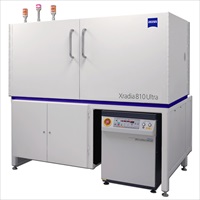
New ZEISS Xradia 810 Ultra X-ray microscope extends the reach and value of 3D imaging for science and industry
ZEISS is introducing a new X-ray microscopy (XRM) solution that increases throughput for three-dimensional imaging at the nanoscale by up to 10 times. Using a series of technical innovations to achieve better contrast, and in turn faster acquisition, the new ZEISS Xradia 810 Ultra revolutionizes the X-ray imaging model in scientific and industrial research labs worldwide. Introduced at the 2013 Microscopy and Microanalysis conference in Indianapolis, the microscope system is available to order now...


 Since the first demonstrations of Bose-Einstein condensation in 1995, ultra-cold matter has become a fertile and lively field of study. Research around the world is establishing a high level of understanding of the underlying physics for applications, such as inertial guidance systems, atomic clocks and quantum computing. Teams are also beginning to design and build compact, low-power instrumentation for handling ultra-cold atoms...
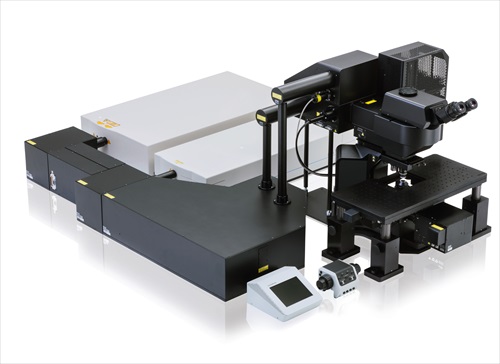 With its high speed and precision performance, the FVMPE-RS is designed for electrophysiology and optogenetics studies. It is also a good match for applications such as high-speed calcium and in vivo imaging, peristalsis and blood flow studies, mosaic imaging, connectomics and functional brain imaging, stem cell research, and any field that requires precise colocalisation, uncaging, simultaneous imaging/stimulation, extensive real-time signal processing, or multipoint mapping....
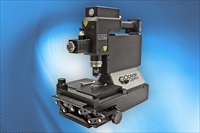
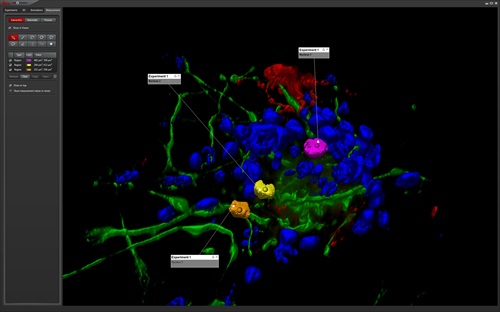 The software platform for advanced life science research, Leica Appplication Suite Advanced Fluorescence (LAS AF), originally launched in 2005 for Leica Microsystems' widefield and confocal microscope systems, has been released in its 3.2 version. This version focuses on 3D analysis, 3D measurements and 3D visualization. The 3D functionalities are especially interesting for users of Leica Microsystems' widefield super-resolution system Leica SR GSD 3D: They make GSD (Ground State Depletion) data visible as volume rendered images and therefore add a third dimension to super-resolution images. Further features include...
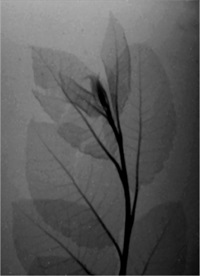
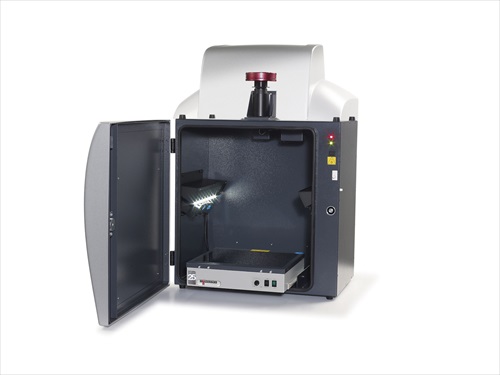 Scientific Digital Imaging’s [SDI’s] Syngene Division, a world-leading manufacturer of image analysis solutions is delighted to announce that the lighting and filter conditions in the G:BOX image analysis system have been optimised to allow faster, safer visualisation of proteins on stain-free gels. Technical specialists at Syngene tested filter and lighting conditions in a G:BOX XR5 image analysis system to accurately image a range of proteins (2-300ng) run on a Criterion TGX Stain-Free gel. For optimum imaging performance, the gel was exposed to 5 minutes of mid wave UV (302nm) on a UV transilluminator and the gel was imaged using a UV filter and an exposure time of 2 seconds. The gel was then stained with ProtoBlue Safe and imaged again.
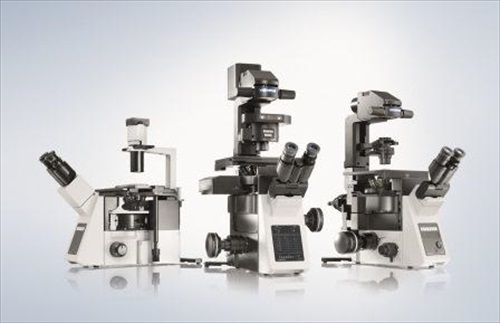 Demonstrating the very latest in live cell imaging technologies, Olympus will exhibit its range of IX3 inverted microscope frames with associated software and accessories at the upcoming European Molecular Biology Organisation (EMBO) Meeting 2013, taking place in Amsterdam on 21-24 September. Delegates of the “Seeing is Believing –Imaging the Processes of Life” Symposium hosted by EMBO in collaboration with the European Molecular Biology Laboratory (EMBL), which takes place on the 3-6 October in Heidelberg (Germany), will also have the chance to discover how the Olympus open source microscopy concept is advancing live cell imaging...
 The Opto-Mechanics and Physical Reliability Laboratory at SUNY Binghamton is seeking to understand the electronic packaging and reliability using numerical and experimental methods. They use Digital Image Correlation (DIC), a non-contact optical deformation measurement technique which provides full field in plane and out of plane deformation with subpixel accuracy. This enables recognition of distinct features on the test surface based on the gray scale variation in an image and assigns coordinates to these features...
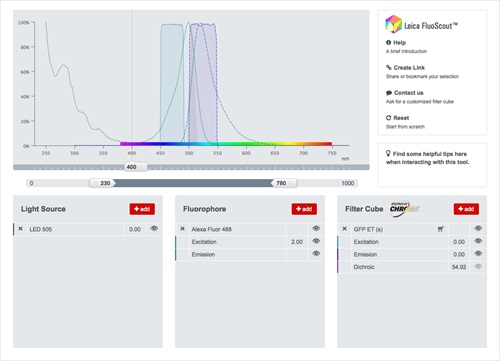 Leica Microsystems launched Leica FluoScout, an online tool that enables users of fluorescence microscopes to determine the optimal filter cube or filter set for achieving excellent imaging results. Find the optimal combination of light sources, fluorophores and filter cubes To achieve excellent results in fluorescence microscopy, the light source, the fluorophores and the filter cubes have to be matched. A perfect fit of excitation and emission filter set maximizes the efficiency of excitation and emission of the fluorophores to provide crisp images. Leica FluoScout makes the matching of these components easy by recommending filter cubes based on the users choice of fluorophore...
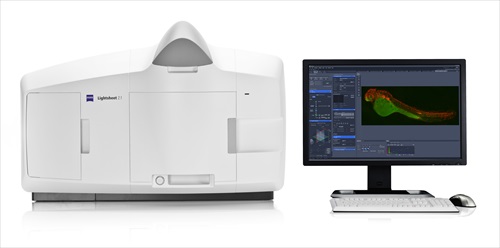 Lightsheet Z.1 from ZEISS is one of the winners of the 51st R&D 100 Award. An independent jury and the publisher of the R&D Magazine recognize and celebrate the top 100 technology products every year. The official award ceremony will take place on 7 November in Orlando, Florida, as part of a gala event. As its name suggests, the Lightsheet Z.1 fluorescence microscope system operates with a light sheet – an expanded light beam that penetrates the specimen from the side...
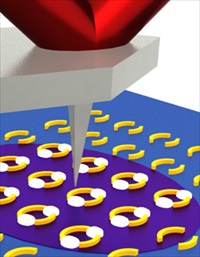 Researchers from the National Institute of Standards and Technology (NIST) and the University of Maryland have shown how to make nanoscale measurements of critical properties of plasmonic nanomaterials—the specially engineered nanostructures that modify the interaction of light and matter for a variety of applications, including sensors, cloaking (invisibility), photovoltaics and therapeutics. Their technique is one of the few that allows researchers to make actual physical measurements of these materials at the nanoscale without affecting the nanomaterial's function...